Accessible Bathroom Transformation: My Home Modifications Journey
If you’ve been following along, you’ll know that 2025 quietly became my year of home modifications.
And one of the biggest challenges that I took on was my bathroom.
As someone living with a progressive condition, accessibility isn’t something I can put off or ‘figure out later’. It’s something that directly impacts how I move through my day safely, how much energy I use, and how independent I can be at home.
So this wasn’t just a renovation.
It was about creating a space that actually works for me.
Why I made these changes
Over time, I started to notice things becoming harder, but more so, they were no longer safe.
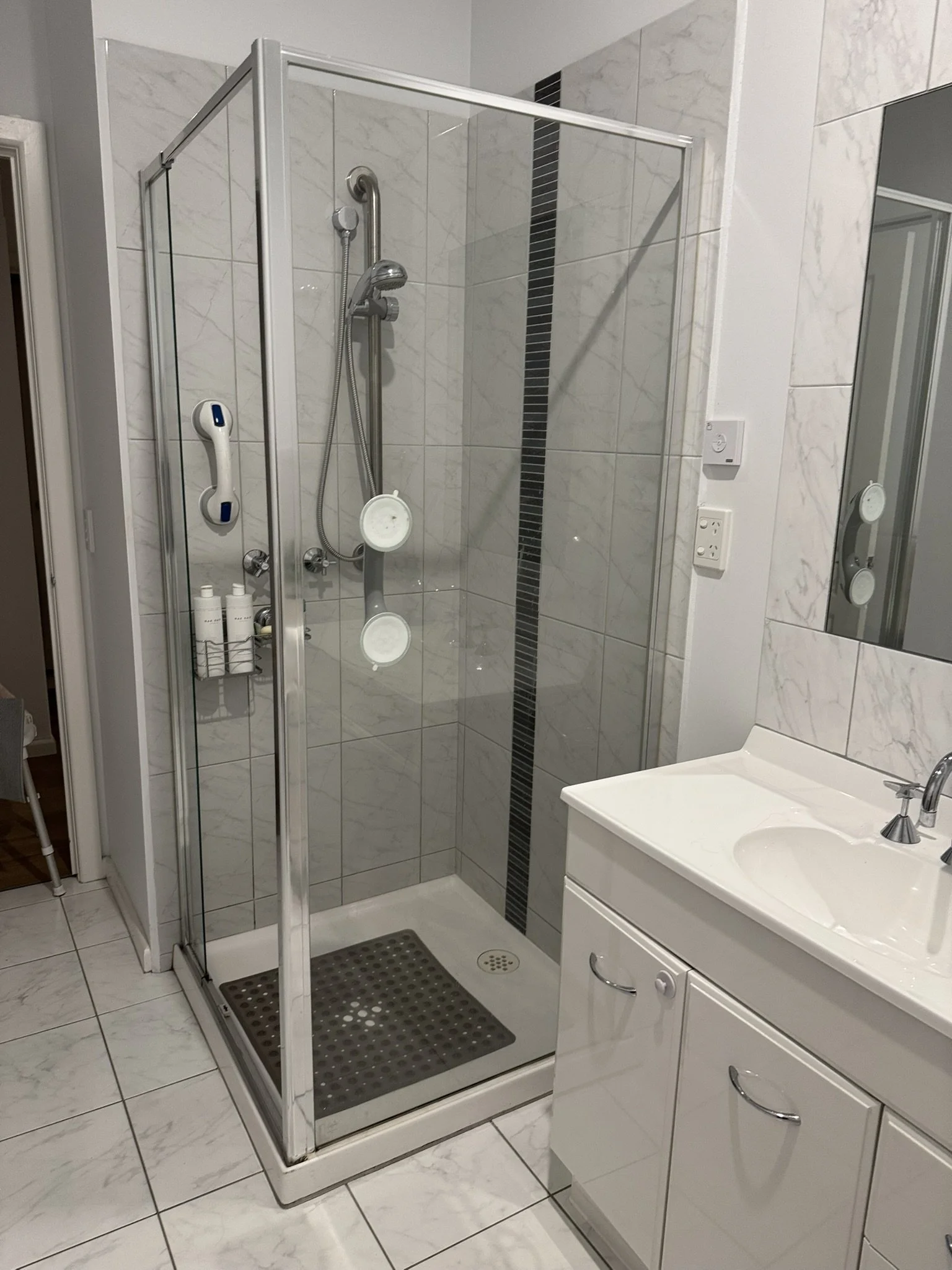
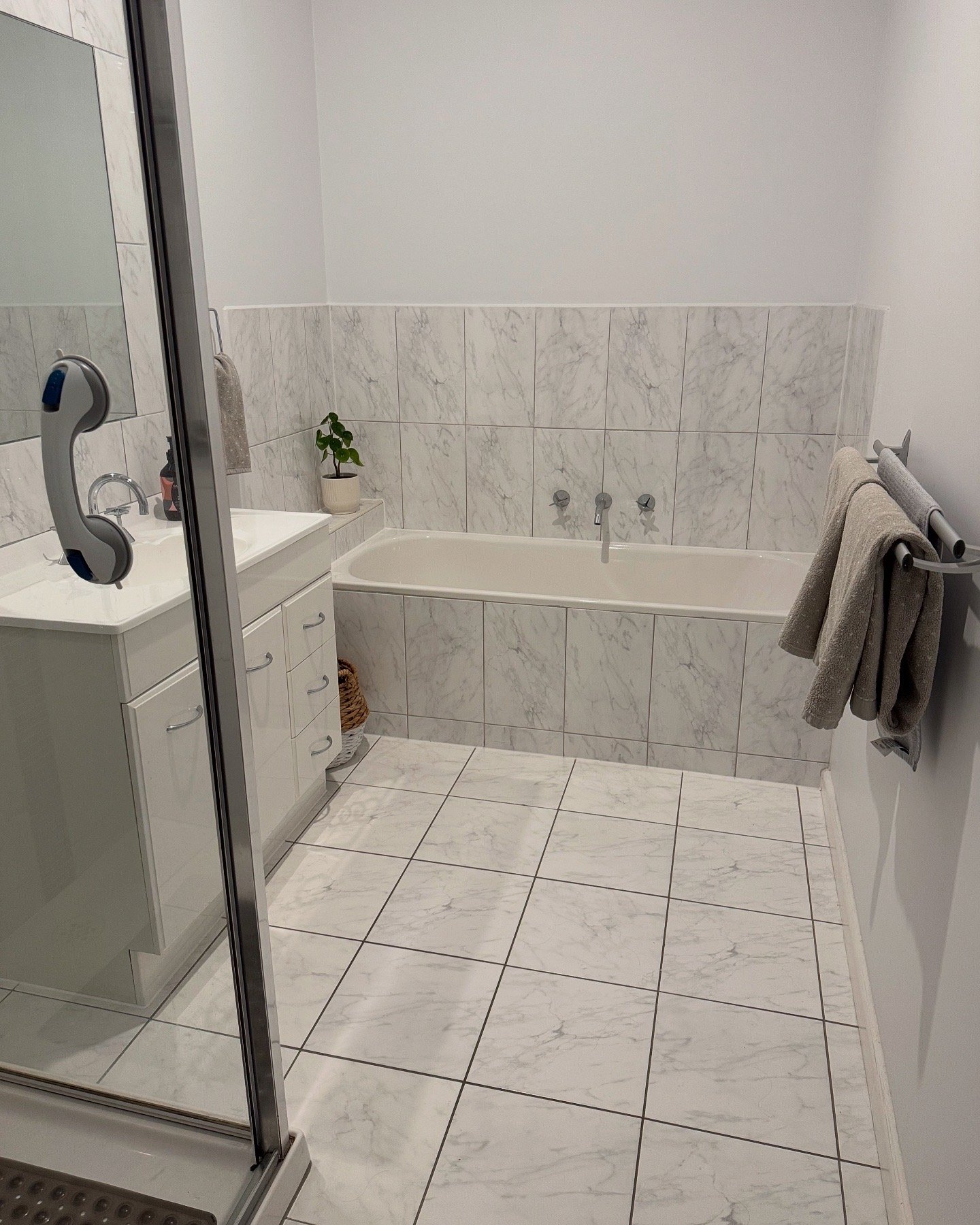
The door was too narrow to enter using a mobility aid, which meant awkward manoeuvring just to get in. The separate toilet was so small it was difficult to access properly. And yes… I even had stick on grab rails (I know, what a nightmare) - not exactly something you want to rely on when your balance is off.
It became a space where I had to be constantly switched on.
Stepping into the shower felt like a risk.
Reaching the sink wasn’t stable or comfortable.
Moving around in a tight layout meant there was very little room for error.
And when your balance or mobility isn’t consistent, those small moments can quickly turn into falls.
That’s what really shifted things for me, it wasn’t just about convenience anymore, it was about reducing risk and feeling safe in my own home.
I wanted a bathroom that:
felt easy to use every day
supported my independence
reduced the risk of falls
didn’t require constant caution
And just as importantly, I still wanted it to feel like home.
Because accessible shouldn’t mean clinical.
The transformation: what changed
The new layout and features have completely changed how I use the space, and honestly, how I feel using it!
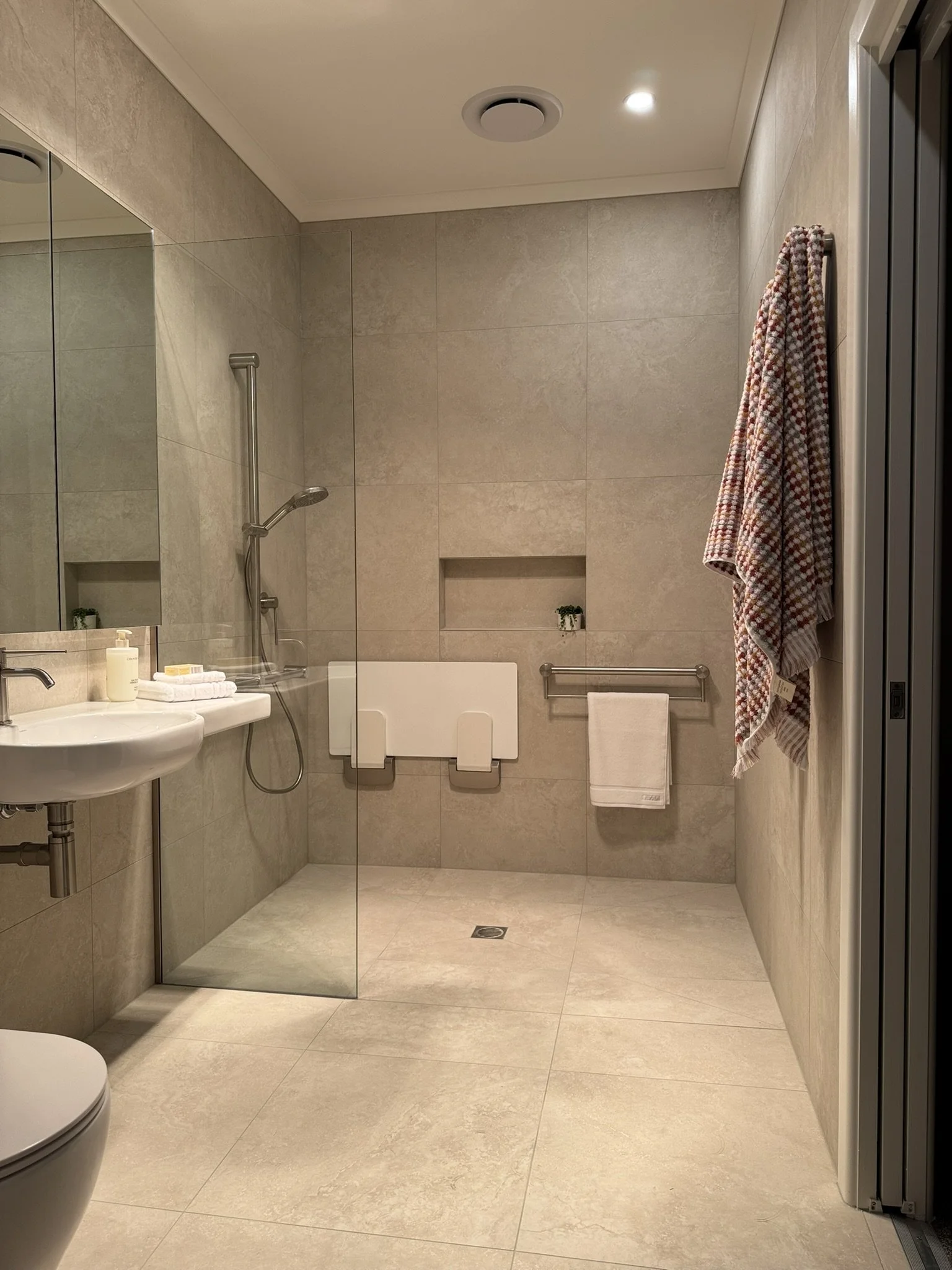
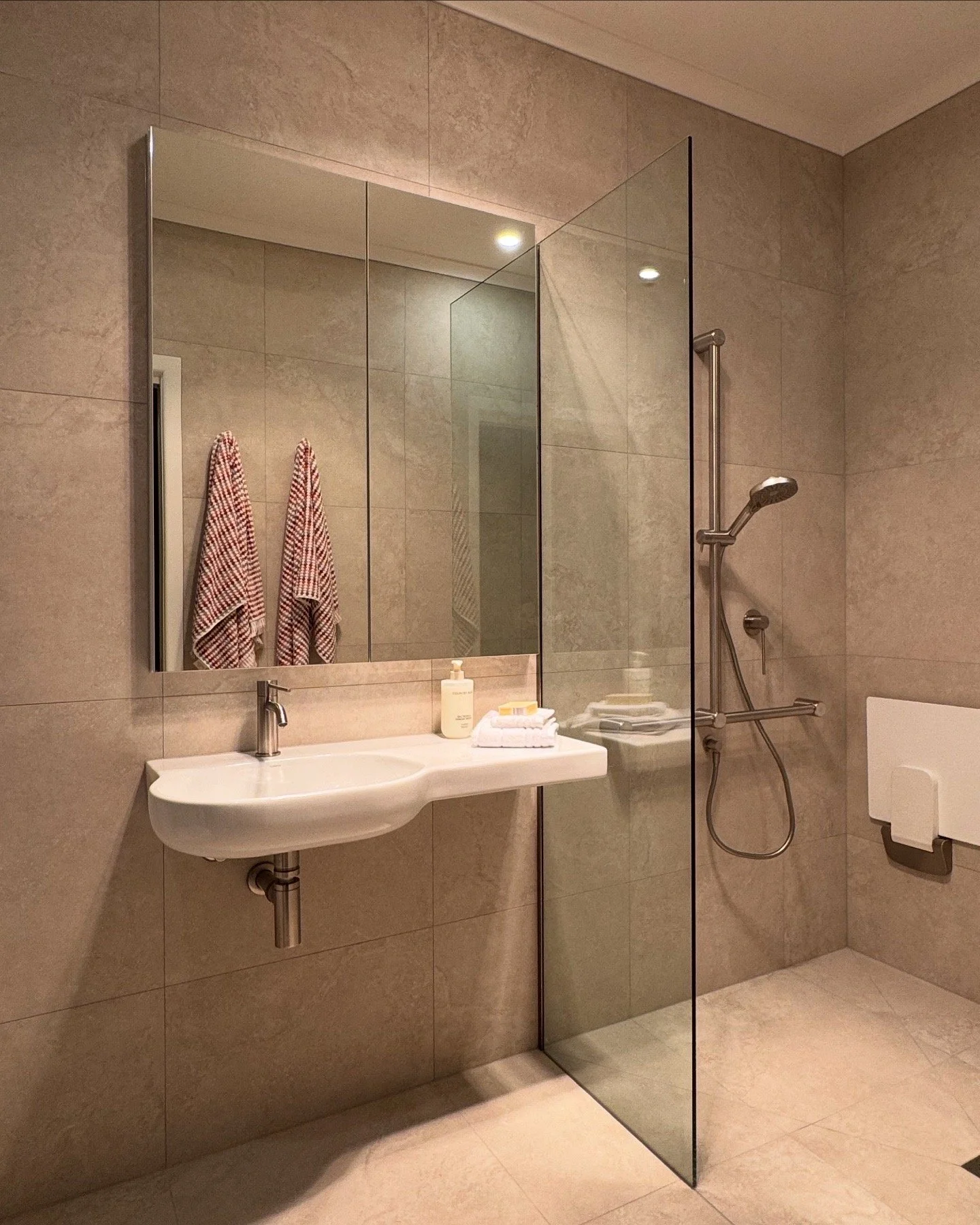
Step free, roll-in shower
No lip, no step, no awkward manoeuvring. Just a seamless entry that makes a huge difference day to day.
Drop down shower seat
Secure, supportive, and easy to fold away. It’s there when I need it, but doesn’t take over the space.
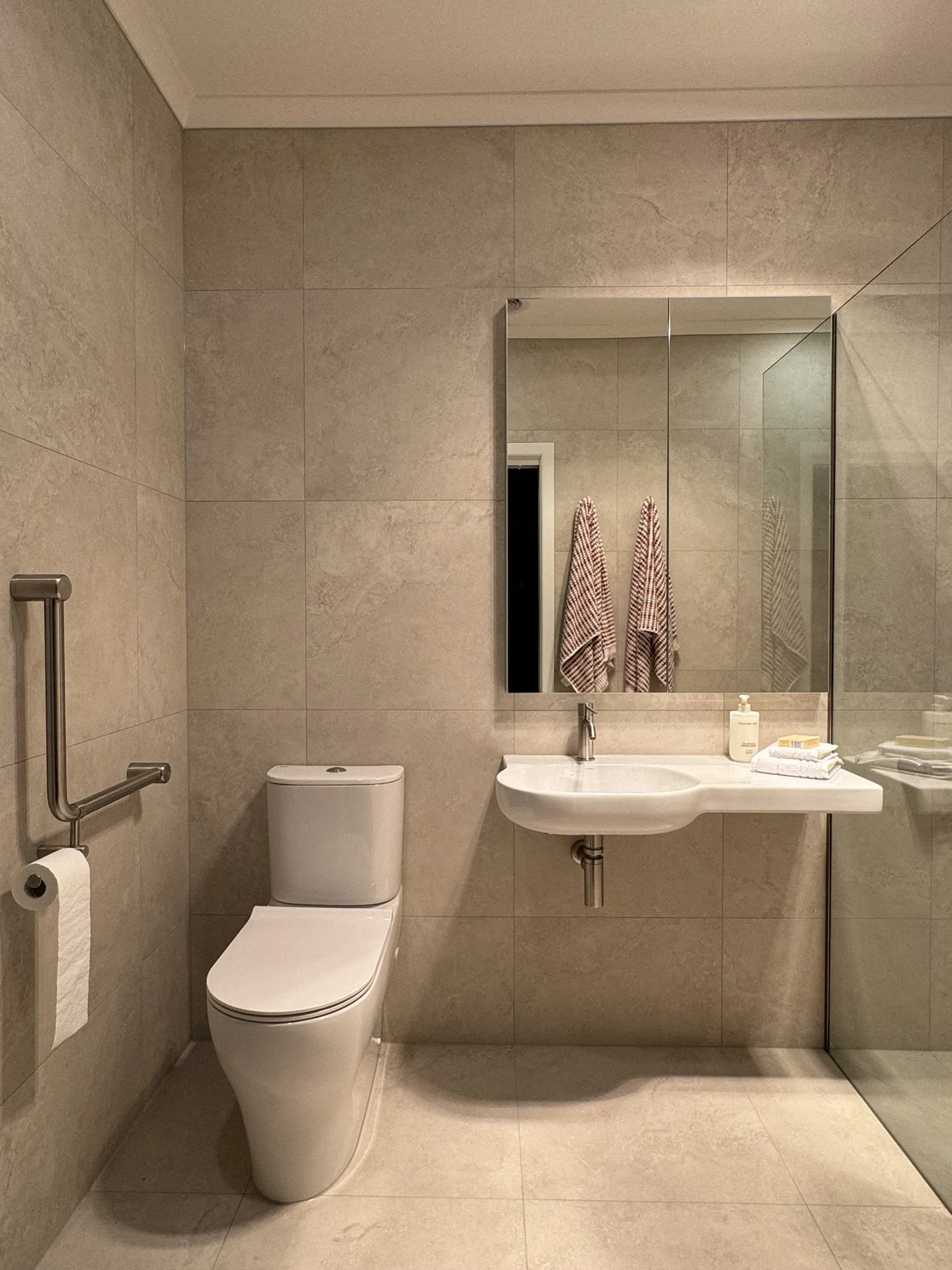
Permanent grab rails
These double as towel rails, which I love. They’re functional without screaming “hospital bathroom.”
Roll-under sink
Being able to get closer to the sink has made everyday tasks so much easier and more comfortable.
Non-slip flooring
One of those things you don’t think about until you do. The non-slip tiles adds safety without compromising the overall look.
More space to move
This might be the biggest one. Having enough room to actually move freely makes a huge difference.
What people don’t think about (but should)
Going through this process really highlighted how many of the most important things aren’t the obvious ones.
For me, space was one of the biggest factors. You can have all the right fixtures, but if the layout is tight or hard to move through, it quickly becomes frustrating (and unsafe).
Placement matters just as much. Things like taps, shower mixers, and grab rails might seem small, but where they sit can completely change how usable a space feels, especially if something is just out of reach.
Entry points are another easy one to overlook. A wider doorway or level threshold makes everyday movement smoother and less stressful. The ensuite door from my bedroom might just be my favourite feature of the whole renovation!
And something I didn’t fully appreciate until now - good design saves energy. When a space works with you instead of against you, everything feels easier, more natural, and more independent.
Accessible can still be beautiful
This was really important to me.
I didn’t want a space that felt clinical or overly modified. I wanted something that felt calm, warm, and like my home.
And the good news is, you can absolutely have both.
Accessible design can still feel:
modern
minimal
considered
and genuinely beautiful
It’s not about compromising on style. It’s about designing smarter.
My biggest takeaways
If you’re thinking about home modifications or planning your own accessible bathroom, my advice is:
Start with how you actually live day to day
Prioritise layout and flow before anything else
Think long-term, not just what works right now
And work with people who truly understand accessibility
Because the right setup doesn’t just make things easier, it gives you more independence, more confidence, and more energy for the things that matter.
This transformation has genuinely changed how I move through my home.
It’s made everyday routines simpler, safer, and less exhausting, and that kind of impact is hard to put into words.
If you’re considering home modifications, take this as your sign to start exploring what’s possible.
And if you want to see more real-life accessibility insights from homes to hotels, cafes, and everything in between - you can find more over on my blog.
Because details matter.
Shoutout to my amazing builders, Buildsmart Group for bringing this to life… my dream bathroom!